


Open Space Innovations: Meeting the Challenges of Today and the Future
Posted June 22, 2026
For more than 30 years, Chester County has built an acclaimed open space preservation program that has successfully addressed its original goal of curbing suburban sprawl. This success has been made possible through strong partnerships among municipalities, conservation organizations, agricultural stakeholders, and residents who share a commitment to preserving the county's natural and cultural resources.
Today, Chester County faces a new set of land-related challenges, including a shortage of affordable and attainable housing and a diminishing supply of farmland accessible to beginning farmers. While these issues are often addressed independently, the County recognizes that more effective and lasting solutions may emerge through a conservation-minded approach that draws upon the lessons, partnerships, and expertise developed through decades of land preservation efforts.
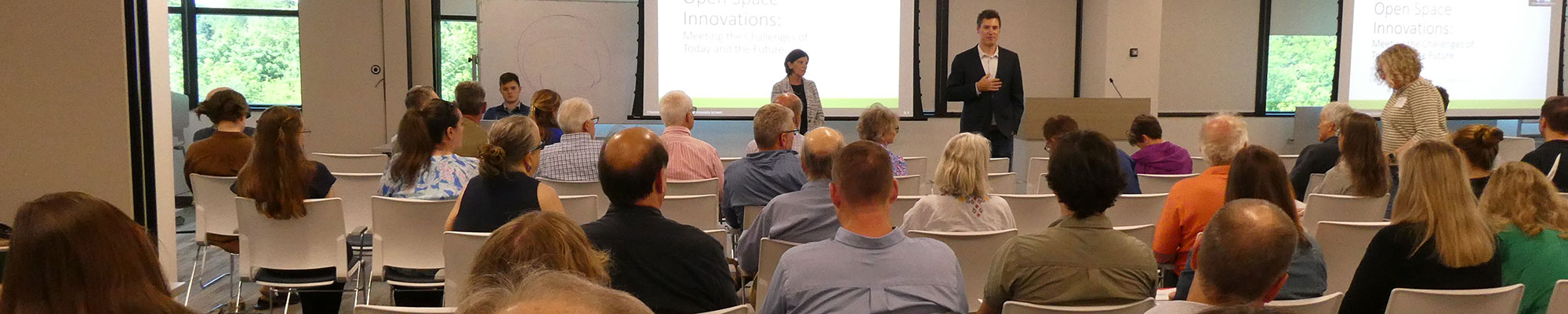
On June 1, the Chester County Planning Commission and Department of Parks & Preservation co-hosted Open Space Innovations: Meeting the Challenges of Today and the Future. The program brought together municipal leaders, conservation professionals, agricultural organizations, housing developers, and housing advocates to explore innovative approaches from across the country that expand access to farmland and affordable housing while advancing land conservation goals.
Featured presentations included:
- The Farmer's Land Trust, which highlighted its Farmland Commons model that provides long-term land access and housing opportunities for small-scale regenerative farm businesses;
- The Conservation Fund, which shared information about its Working Farms Fund, an initiative that protects farmland from development while supporting farm businesses that can sustainably operate on, and eventually purchase, the land; and
- The Athens Land Trust, which discussed how community land trusts can preserve neighborhood affordability while maintaining community green space.
Following the presentations, attendees participated in facilitated roundtable discussions focused on how these models could be adapted to Chester County's unique circumstances. The discussions brought together stakeholders who do not often work directly with one another — including representatives from the housing, agriculture, and conservation sectors — to exchange perspectives and identify potential solutions to housing affordability, farmland access, and land conservation challenges.
Each group shared key takeaways, opportunities, and potential barriers to implementing similar approaches locally, as well as ideas for how the County and its partners could help address those challenges.
The event provided valuable insights for attendees and County staff alike, encouraging new ways of thinking about how existing programs can better respond to evolving community needs. The conversations and ideas generated during the program may also help inform future updates to Landscapes, Chester County's comprehensive plan, which are expected to begin in the coming year.