


Bike Park
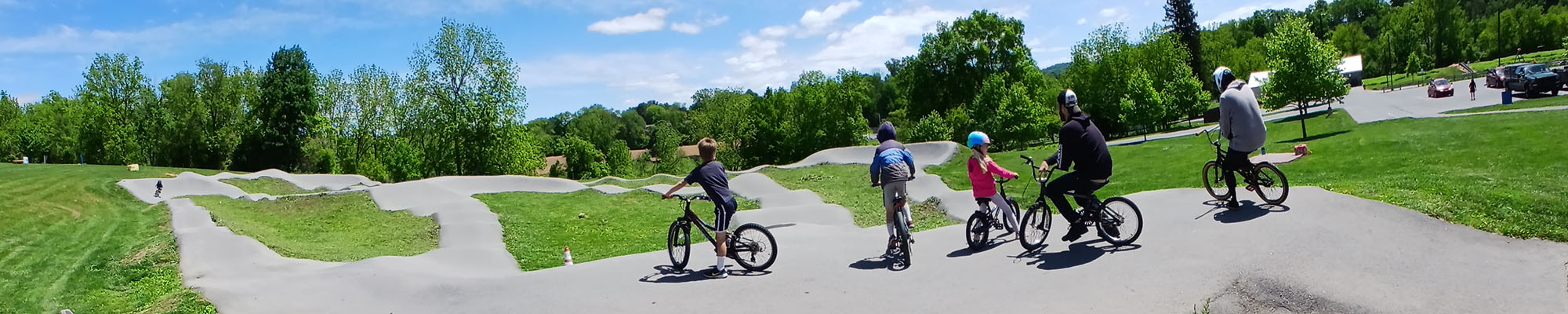
A dedicated recreational facility primarily for bicycles which may be used by other similar recreational users (scooters, razers, skateboards) depending on design and facility type.
How it Works
In the past, parks usually focused on traditional recreation such as playgrounds, sports fields, and similar facilities. Today, recreation includes a much wider range of activities. Communities now offer options such as skateparks, rock-climbing walls, pickleball courts, splash pads, zip lines, and bike parks. This eTool examines how communities can plan, build, expand, and enhance bike parks that are open to the public.
When considering a bike park, communities should gather input from the public. Involving residents and other stakeholders early in the process helps build support and ensures the bike park meets local needs. Communities should decide what type of bike park they want and where it should be located. Local riders should be involved in the planning process, along with professional experts to the extent that funding allows, to lead to a more successful project.
A community that wants to build a bike park can start by updating its planning documents through a public process to show where a bike park could be located and how it might be developed. These documents might include a comprehensive plan, parks and recreation study, parks master plan, open space plan, or an official map. A recreation survey could be used as a simpler alternative to gain these results. They may also be addressed in local rules and regulations, such as zoning or subdivision ordinances. Having a bike park listed in these municipal documents can make it easier to acquire grants or other funding.
Bike parks can be built as municipal projects but are often constructed through partnerships between municipalities and nonprofit organizations, typically within existing public parks or alongside municipal buildings, libraries, or public works sites. In some cases, private developers can build bike parks if local zoning allows them, either as part of a new development or as a commercial facility. Funding often comes from a mix of public and private grants, local partnerships, donations, fundraising campaigns, and volunteer labor for construction and maintenance.
Benefits
Economic Benefits
Bike parks can help boost the local economy by bringing visitors into the community who often spend money at nearby shops, restaurants, and hotels. Bike parks can also help attract new businesses to the area.
Public Health
Bike parks give people more opportunities to be active outdoors, supporting physical and mental health, and can help build a sense of community by encouraging people of all ages to be active and socialize.
Equity, Inclusion, and Opportunity
Bike parks offer a safe and legal place for people of all ages to ride bikes. Many mountain bikers and BMX riders are part of strong, existing communities. When there aren't designated places to ride, people sometimes build trails or features on public or private land without permission. By creating official bike parks, communities can provide a safe, welcoming space for riders and other users, giving residents and visitors a positive way to enjoy biking or try something new.
Bringing the Community Together
Bike parks are welcoming places where people of all ages, backgrounds, and abilities can gather. They often become lively community spaces where events can be held, public art can be displayed, and people can socialize.
Environmental Benefits
Bike parks can be designed in environmentally friendly ways, such as fitting them into natural areas like wooded spaces, using materials that allow water to soak into the ground, and managing rainwater through features like rain gardens (stormwater management). Having more recreation options close to home also means people don't need to travel as far to enjoy them, which can reduce traffic and emissions.
Get Started
There are several options to start the process of planning and building a bike park. Since many people may not be familiar with bike parks, examples should be included anytime they are being discussed, including each of the options below. While skateparks are now common, bike parks — such as pump tracks, skills areas, or jump lines — may be new to some residents. Sharing photos, drawings, or short videos can help people better understand what bike parks look like and how they are used. This early education can clear up confusion and prevent misunderstandings during the planning process.
One issue that might be important to discuss early in the process is concern with noise. Bike parks generally produce very little noise, especially compared to more traditional facilities like basketball or pickleball courts. Unlike courts where the repeated sound of bouncing balls can be disruptive, bike parks do not create constant or loud noises, which can help address common concerns from nearby residents.
Community Discussion and Outreach Options
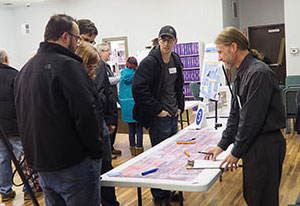
The simplest approach is to ask residents directly about potentially building a bike park. This can be done through an online recreation survey, postcards mailed to homes, inserts with utility bills, community newsletters, or other methods that work best locally. Communities can also hold public meetings to hear ideas and gather feedback, including regular planning commission meetings, supervisors/council meetings, or meetings of other boards and committees. It is important to notify residents and give them an opportunity to share their input.
Undertake a Public Survey
To gauge interest in a bike park, a community could consider using a public survey. This can be done on its own or as part of a larger effort such as a parks and recreation survey or park master plan. The survey should ask what type of bike park people would like, how big it should be, and where it could be built. Surveys should allow for different forms of input to ensure sufficient feedback including online options (via a website/apps/QR code), hardcopies (post cards/copies available at public places), municipal newsletters (via email, hardcopy, or on website), email blasts (municipal email list/subscription), or flyers posted in businesses or public buildings (libraries, etc.).
Update or Develop Community Plans
As mentioned under 'How it Works', discussing bike parks during the development of more involved efforts such as a comprehensive plan, parks and recreation study, parks master plan, or other public document can be used to engage residents and stakeholders.
Review Local Ordinances
Communities should review their local zoning and subdivision ordinances to determine if bike parks are permitted under current regulations. Addressing this issue may be as simple as adding a clear definition of a bike park and allowing it within a park or public facility. Local ordinance regulations can also include basic guidelines or standards to help ensure bike parks are safe and well designed. For publicly owned parks, detailed regulations are often not necessary. If bike parks are allowed as part of new developments, this can be addressed in zoning or subdivision regulations, with design guidelines included to allow flexibility. An official map can also be used to identify areas where bike parks could reasonably be built.
Bike Park Standards in Municipal Ordinances
The following are ideas for strategies to incorporate bike parks into municipal ordinance requirements:
- Provide a clear definition for a bike park, including different types such as pump tracks, skills parks, and jump lines, as well as common features like jumps and banked turns (berms).
- Ensure bike parks are officially included as a type of park or recreation area.
- When zoning requirements require open space or green space in certain areas or developments, clearly state that alternative recreation options — such as bike parks — can count toward meeting those requirements when they are appropriate.
- Require new developments to set aside a portion of their land as open space, which can include active recreation areas like bike parks. Larger developments can be required to provide more open space than smaller ones.
- Use zoning regulations to require open space in general but place the detailed design and recreation requirements in the subdivision ordinance. This allows more flexibility, especially in downtown areas or on smaller properties.
- In special cases where providing open space on-site is difficult, allow developers to pay a fee instead (fee-in-lieu of required open space). While this is not the preferred option, the collected funds could be used by the community to build bike parks or other recreation facilities nearby, such as in a public park, in line with community plans such as the municipal comprehensive plan or open space plan.
Definitions/Glossary of Terms
Municipal policy makers should be flexible regarding the definitions for recreational uses and should think broadly about what constitutes a park, recreational facility, or open space. In this case, at a minimum, a definition for Bike Parks should be included in the zoning ordinance and permitted as part of a municipal park or other open space.
Alternative Recreation
These are newer or different types of recreation that offer more variety than traditional options like playgrounds, sports fields, or basketball and tennis courts. Examples include climbing walls, frisbee golf, nature-based play areas, skateparks, splash pads, and bike parks.
- Climbing Walls / Rock Climbing: Rock climbing can be done indoors or outdoors. It may use natural features like cliffs or rock formations, or man-made structures such as climbing walls or towers.
- Frisbee Golf (Disc Golf): Disc golf is a low-cost activity with minimal impact on the land. It is played like golf, but instead of hitting a ball, players throw a disc toward a metal basket. Courses usually have 9 or 18 holes.
- Nature-Based Play: These play areas use natural or nature-inspired materials. Examples include logs for climbing or balancing, large rocks for climbing or seating, and wooden elements that encourage creative and active play.
- Skate Park: Skate parks have been around for decades and are now common in many communities. They are usually professionally built concrete areas designed for skateboarding and similar activities. Skateparks may be fenced and often include ramps, rails, bowls, and curved walls for riding and tricks.
- Splash Pad/Water Play Area: Splash pads are outdoor water play areas, especially popular with children during the summer. They are typically flat concrete surfaces with water spraying from the ground or other features, providing a fun and safe way to cool off.
- Bike Park: See below.
Bike Park
A bike park is a dedicated recreational facility primarily for bicycles which may be used by other similar recreational users (scooters, razers, skateboards) depending on design and facility type. For the purposes of this eTool bike parks may be one or a combination of the following types:
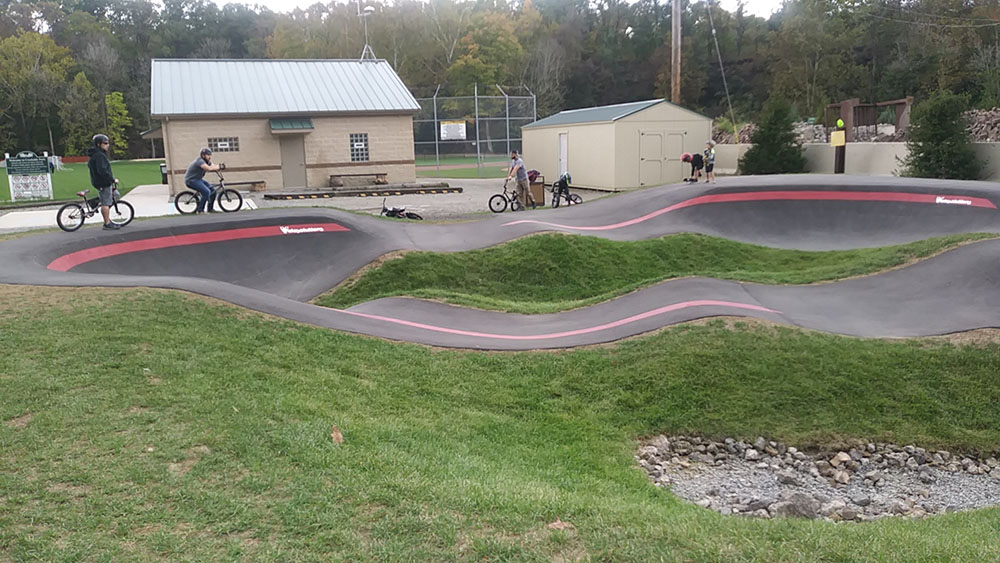
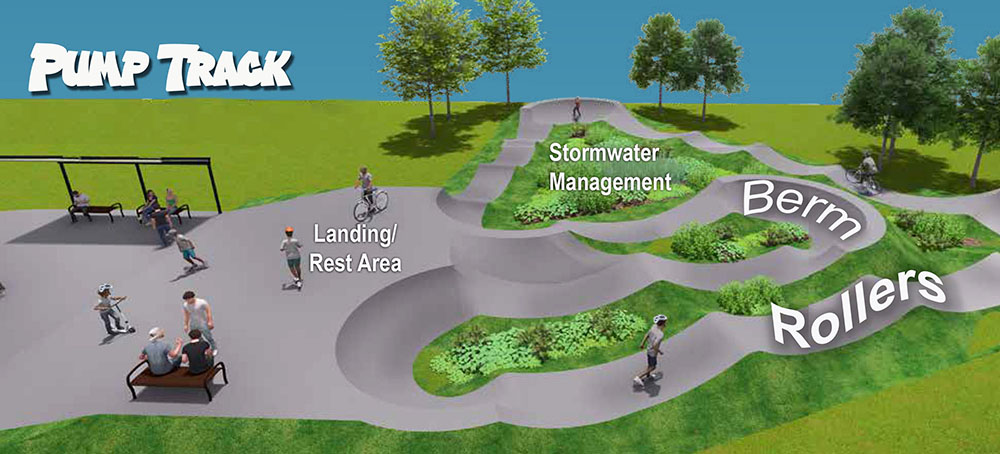
- Pump Track: A pump track is a looped or connected track made of dirt, wood, asphalt, or concrete. It has smooth hills and dips (rollers), along with banked turns (berms), that let riders gain speed by shifting their body up and down instead of pedaling. Some pump tracks also include small jumps or other features.
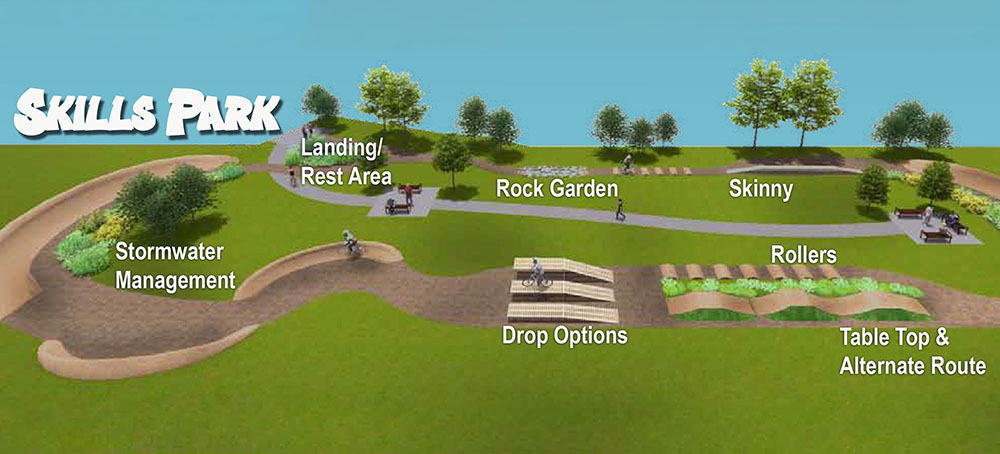
- Skills Park: A skills park includes a variety of riding features designed to help people learn and improve bike skills. Features are usually arranged from easier to harder so beginners can start small and more experienced riders can challenge themselves. Common features include smooth hills and dips (rollers), banked turns (berms), jumps, drops, narrow riding paths, rock sections, walls, and similar features. A "bike playground" is a type of skills park mostly oriented towards children, with smaller, safer features that encourage learning and fun.
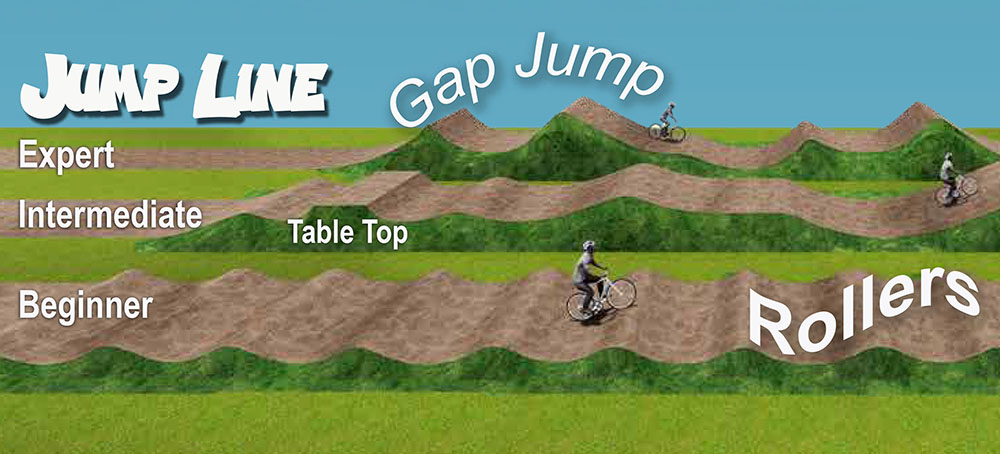
- Jump Line: A jump line is a mostly straight path with a series of jumps placed one after another. These jumps are usually the same size along each line. Multiple jump lines are often built side by side, starting with smaller jumps for beginners and progressing to larger, more advanced gap jumps for experienced riders (progressive jump lines). This allows riders to safely build skills over time.
Bike Park Features
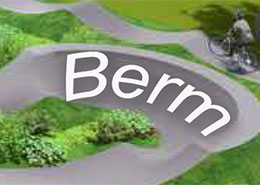
Berm: A raised, curved turn that helps riders keep their speed while going around a corner. Berms are usually made of dirt, wood, or a paved surface.
Roller (or "whoop"): A smooth, rounded bump, similar to a small roller coaster that riders can roll over or use to gain speed by shifting their body.
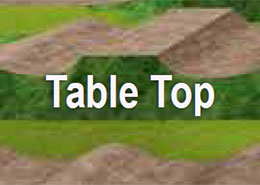
Tabletop Jump: A jump with a solid, flat top and no gap in the middle. These are generally safer and easier for riders of all skill levels.
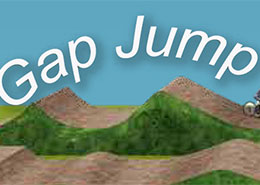
Gap Jump: A jump with an open space between the takeoff and landing areas. These jumps are more challenging and are usually meant for experienced riders who can safely clear the gap.
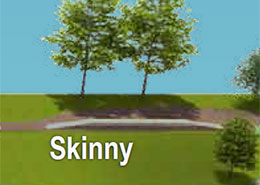
Skinny: A narrow, raised feature, often made of wood or a log, that riders balance on while riding. Difficulty depends on the length or narrowness of the feature.
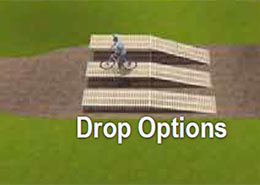
Drop: A feature where riders roll or ride off a ledge made of dirt, wood, or rock. Drops vary in height and become more challenging as they get taller.
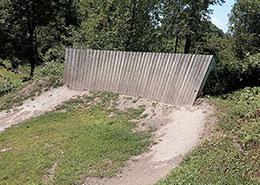
Wall: A tall, curved riding surface, usually made of wood and higher than a berm. Walls are designed for advanced riders and allow for higher speeds while maintaining safety.
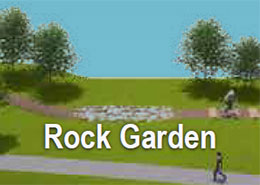
Rock Garden: A section of trail filled with rocks that riders must carefully navigate, simulating what you might find on a natural mountain bike trail.
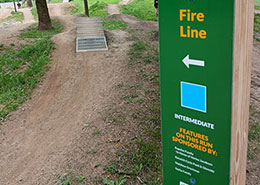
Line (Track or "Run"): A single path or route within a bike park that includes a set of features of the same difficulty level, such as beginner, intermediate, or expert.
Design Considerations for Bike Parks
- Location: Bike parks should be placed where people are most likely to use them, typically within existing public parks. It's important to consider nearby homes and provide some separation or buffer if needed.
- Safety: Designs should follow best practices like Crime Prevention Through Environmental Design (CPED), which means making the park easy to see from outside and inside, so users and spectators are safe. Bike parks should also be designed to keep pedestrians and riders away from cars or parking areas. The design of the bike park or its features can be modified to reduce safety concerns, depending on the preferences of the municipality or users. While liability (legal responsibility for accidents) is often a concern, anecdotal evidence suggests that adding a bike park usually doesn't significantly increase risk for a community, especially if parks already exist.
- Parking: Bike parks should be easy to reach by walking or biking whenever possible. Parking areas can use permeable surfaces like gravel, with extra spaces available for special events or overflow (on grassy areas). Barriers such as fences, berms, or landscaping should separate the parking area from the park if desired.
- Shade and Landscaping: Bike parks should offer shaded areas, either through a pavilion, trees, or by being located near or beneath woodlands. Native plants can be incorporated into site designs for shade or stormwater features within or adjacent to the bike park.
- Amenities: Parks should include practical features such as bathrooms, drinking water, benches or picnic tables, bike racks, repair stations, and shaded areas.
- Impacts on Neighbors: When choosing a site, consider how the park might affect nearby homes or businesses. Use buffers such as landscaping, fences, and appropriate lighting.
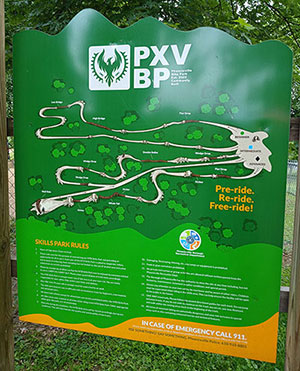
- Rules: Posting rules and etiquette guidelines is recommended. This could include things like "helmets required" or "wait your turn and watch for other riders." View example rules from Phoenixville Bike Park.
- Design: Bike parks can accommodate different users (bikes, skateboards, scooters), skill levels, and ages. Track and feature designs can help reduce collisions, such as using oval or one-way layouts. Designers should balance safety with fun, recognizing that there are trade-offs between reducing risk and keeping the park exciting.
Considerations
Funding
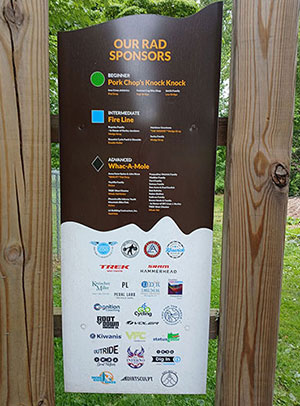
The biggest challenge in creating a bike park is usually money, and sometimes misunderstandings about the park. Public parks are the most common place for bike parks because funding support can be easier to access. Grants are available from various sources to help with buying land and building facilities. Local governments usually apply for these grants, but they can also partner with nonprofit groups.
Communities that include bike parks in official planning documents, such as comprehensive plan, parks and recreation plan, or a park-specific master plan, are more likely to receive funding. Some funding sources require a project's inclusion in a public document as a prerequisite, and this is also beneficial to the grant writing process.
The private sector can also invest in bike parks on their property, either as part of a land development project (residential or commercial) or as an indoor or outdoor commercial facility open to the public, similar to a gym or indoor climbing center, often for a fee or membership.
Construction
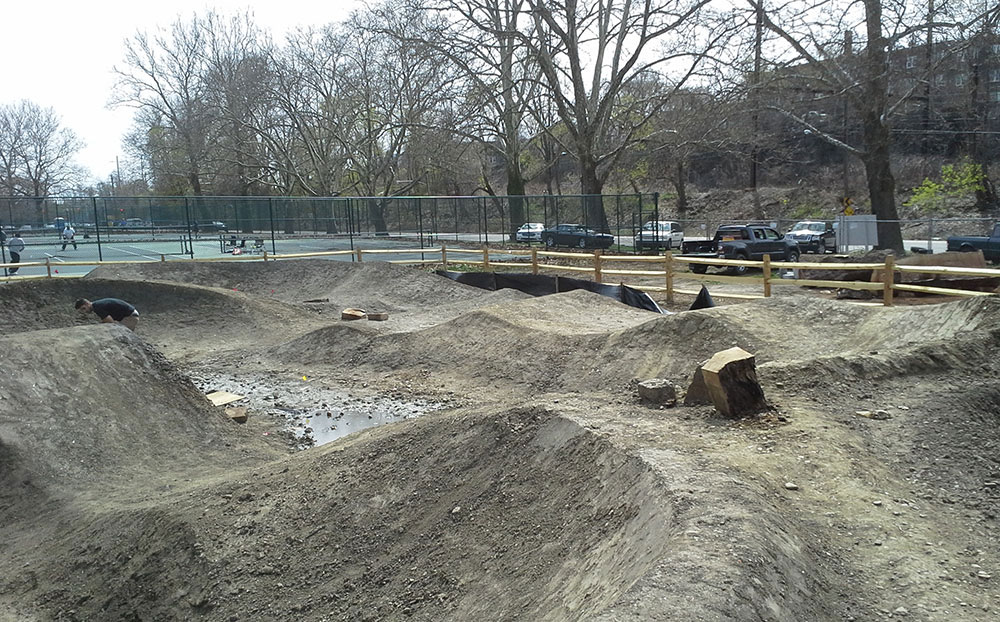
Some bike parks, especially jump lines and pump tracks, are first built cheaply using dirt or other simple materials. While this keeps costs low, it can result in poorly built features that require more repairs or maintenance.
Consulting a professional bike park consultant is recommended, even if only for advice, so the bike park is safe and well designed. In some cases, communities start small, using dirt features to build interest and participation, and later add more permanent features like paved surfaces, additional obstacles, or amenities. Paid consultation ideally for design and potentially for construction should be considered where funding permits. Building once can be a more cost effective as opposed to "starting small" or building a poorly constructed facility at the outset.
Costs can be reduced by using recycled materials, like leftover asphalt or road tailings. Municipal staff and equipment can sometimes handle parts of the planning, design, and construction to lower costs. Partnering with nonprofits or local biking groups can help with volunteer labor, fundraising, or ongoing maintenance.
Ongoing Maintenance
Bike parks require varying levels of maintenance. Dirt tracks and natural features usually require more maintenance than paved areas. Public works staff may lack training in managing natural features and landscapes. Trees and vegetation (in stormwater facilities) should be periodically inspected for disease and potential hazards like dead limbs. Local biking groups, "Friends of the Park" organizations, and other nonprofits can be valuable partners in maintaining a park, helping with both regular care and volunteer efforts.
Defining Needs
Before a community decides to build or improve a bike park, several factors should be considered.
- Community Interest: How many people live in the area, and how interested are they in building or improving a bike park (type, scale, etc.)?
- Available Land: Does the community own a park or other public land that could be used for a bike park?
- Site Suitability: Is the land suitable for a bike park? Consider size, terrain, whether it's wooded or open, and soil conditions
- Partnership Opportunities: Could a bike park be built through a partnership with private organizations or nonprofits? Examples include homeowner associations, schools, libraries, hospitals, bike clubs, or land conservancies.
- Local Support: Are there groups or volunteers who could champion the project, such as Scouts, mountain bike clubs, park friends groups, or recreation groups?
- Maintenance Resources: Does the municipality have the staff and resources to maintain the park, or are there opportunities for partnerships to help with upkeep?
- Liability: Many people worry about legal responsibility for injuries, but anecdotal evidence suggests that bike parks usually don't increase liability for communities that already have parks. If the park is well-designed and rules are clearly posted, the risk is minimal.
Examples
Chester County
Phoenixville Bike Park
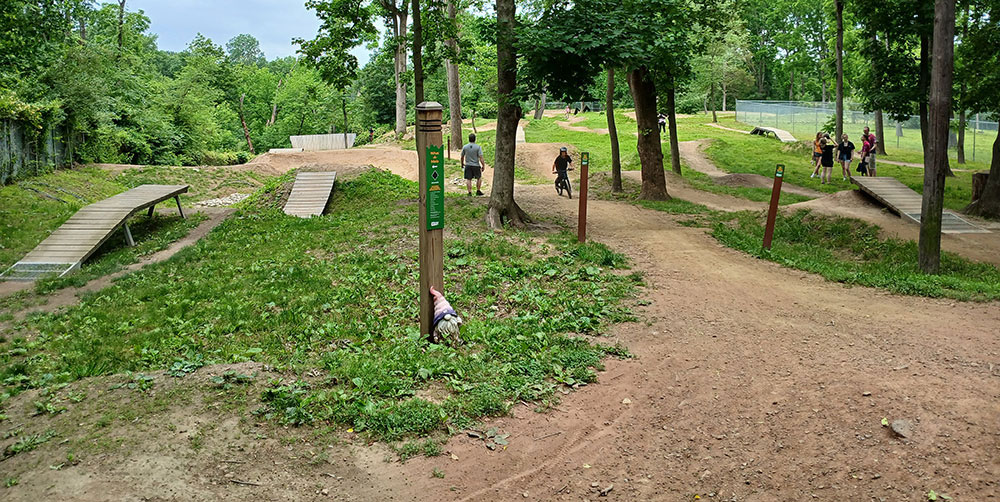
This bike park opened on the north side of Phoenixville in Reservoir Park on June 1, 2023. Funding came from a variety of sources including local families, local businesses, and a crowd funding campaign that generated $125,000 in donations. It was constructed through a partnership with the non-profit More Kids on Bikes and built by DirtSculpt (a Pennsylvania based bike park builder). Further expansion is anticipated in the coming years.
Kennett Bike Park
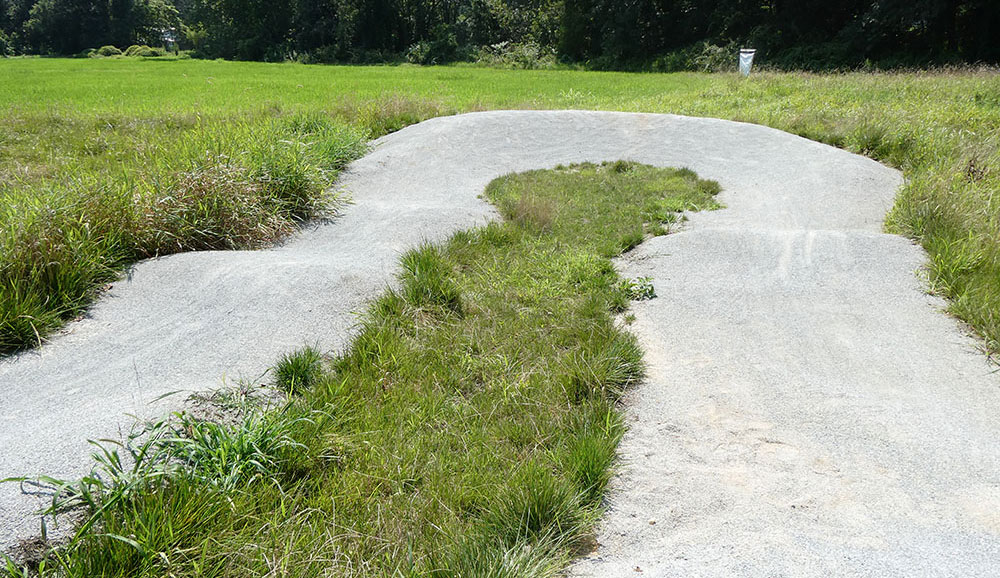
This pump track was built on the Parrish property owned by Kennett Square Borough in Kennett Township just south of Pennock Park in the last quarter of 2023. Bike Kennett, the Kennett Trails Alliance, Kennett Township, Kennett Square Borough, Henry's Bike Shop (Newark, DE), and GreenRoots Landscaping all partnered to enable this facility. The goal was to create a bike park in Kennett to provide community members, and in particular children, with bicycling opportunities.
Bike Kennett, together with Kennett Trails Alliance, raised around $30,000 to fund the initial installation as well as ongoing maintenance, through crowdfunding efforts and corporate donations. GreenRoots (landscaping) donated labor for the installation. There is no municipal funding for the project. Current maintenance is approximately $5,000 a year. Kennett Trails Alliance and Bike Kennett currently maintain the park.
The track is currently a small gravel/dirt pump track in an open area. The goal is to continue to grow the bike park, including an additional track as well as a covered pavilion, water, and other skill elements. The pump track was created as a pilot project.
Elverson Bike Park
Elverson borough received funding to build a skatepark/ pump track in the borough's Livingood Park including $70,209 in state grant funding under the Commonwealth Financing Authority/PA Department of Community and Economic Development's (PA DCED) Greenways, Trails and Recreation Program. The borough partnered with Action-Impact Inc., a local nonprofit who initiated the project. The total project cost is $82,740. Other funds included $12,531 in a cash match from Action-Impact.
Regional
Philly Pump Track
This bike park was built in 2014 and is located in the Belmont Plateau section of Philadelphia's Fairmont Park by the Mann Center. Along with mechanical construction, significant construction was completed by volunteers both from the local neighborhoods and throughout the region.
Camp Olympic Park Pump Track
This pump track is located in Camp Olympic Park in Lower Macungie Township near Emmaus, PA. The facility was initiated by the township's former planning director. The township contracted with DirtSculpt to build the dirt track, which was built in Fall 2015. The cost was $10,000. In 2019 the track was paved through a donation by an anonymous donor. Total paving & improvement costs were $17,700.
When the track was dirt, the township had a yearly maintenance contract with an outside company. Now that the pump track is paved, the township park maintenance staff maintains the track.
Penn Forest Pump Track
This pump track is just north of Jim Thorpe, PA on Route 903 in the Penn Forest Township Recreational Park. The Penn Forest Township Parks committee wished to install a pump track for bikes, scooters, and skateboards in the wooded area of Penn Forest Park, nestled into the existing landscape and trees. The municipal engineer (Barry Isett & Associates) was contracted to assist the Township in completing plans and specifications for the new pump track at the park. The track, which is friendly for beginners, includes various small hills and turns that riders navigate using momentum to generate speed around the track.
The pump track was fully paid for by the township and costs were reduced by using the township engineer to assist with design and engineering and some of the materials, hauling of materials, and partial construction were provided by township staff. Road millings were used in the base to reduce capital costs. Costs included approximately $8,000 for engineering and $32,000 to DirtScupt for final construction with a total cost of approximately $42,000 according to township staff.
Ephrata Bike Park
This skills park and pump track (dirt) is located in Heatherwood Park next to the Warwick Ephrata Rail Trail.
Skills Park and Trails in Quarryville, PA
"The Local" bike park opened in the fall of 2025 currently with roughly four miles of trails for different skills levels and containing a variety of features including a few short progressive gravity trails. Additional work is anticipated to come in the future.
Pennsylvania
Oakmont, PA Pump Track
This pump track is located in the Creekside Park in Oakmont, PA just outside of Pittsburgh and opened in July 2021. It cost $120,000 to build and was funded by a Commonwealth Financing Authority (CFA) grant from the Pennsylvania Department of Community and Economic Development (PA DCED). The pump track was designed by Velosolutions.
National
RaysMTB — Cleveland, Ohio (Indoor Bike Park)
This 160,000 square foot indoor facility was the first of its kind, opening its doors over Thanksgiving 2004. People come from around the country and world to ride at Rays, including an amazing pump track. Rays is generally open October through May and closed during the summer months.
Pump Track — Springfield, Ohio (May 2024)
"Officials approved spending $350,000 for the Sherman Avenue project, which quickly gained attention from cyclists when the track was finished. A YouTube video showing the new track had more than 6,000 views in the first 24 hours after being posted."
Dayton Bike Yard — Dayton, Ohio.
This facility opened in 2024 and provides a variety of elements including a pump track, jump lines, skills park (rock gardens, wooden bridges, etc.), and other features with progressive features for all skill levels. Note the excellent video documenting the entire process and the exciting grand opening.
Skills Park — Montgomery County, MD
This skills park was built in 2023.
Skills Park/Bicycle Playground — Depford Township, NJ
This skills park was built in 2024.
Resource Links
Bike Park Consultants
These are examples of known and experienced pump track designers but are not intended to be all inclusive or endorsements. We recommend contacting the consultants and clients who have had experience working with them to find the best fit for your needs.
Velosolutions
Velosolutions constructs pump tracks and other bicycle facilities. Velo also provides a guide for building bike parks and their website has a "pump track finder". The website contains a portfolio of 600+ projects that can provide insight and inspiration for projects in addition to significant other resources.
American Ramp Company
American Ramp Company designs bike parks of various forms including pump tracks constructed in partnership with Velosolutions. The website contains a portfolio of completed projects that can provide insight and inspiration for projects in addition to significant other resources including a (bike) park development guide.
PumpTraxUSA
PumpTraxUSA constructs pump tracks and other bicycle facilities. Based out of Cleveland, Ohio.
Dirtsculpt
Dirtsculpt is a Pennsylvania based company that constructs pump tracks and other bicycle facilities
Government Agencies and Funding
The Chester County Planning Commission (CCPC) offers Community Planning Assistance for updates to municipal comprehensive plans and development of other plans and studies including official maps, parks recreation and open space plans/studies, parks master plans, and similar projects. CCPC also maintains a list of available grant opportunities for various project types, including grants that could be used toward the design and construction of these facilities.
Chester County Department of Community Development (DCD) Community Revitalization Program (CRP) provides capital improvements funding for the 15 boroughs and the city of Coatesville which may apply to municipal parks improvements such as the construction of Bike Parks. This funding is available every other odd year (2027, 2029, etc.).
The Chester County Parks and Preservation provides funding for Chester County municipal parks improvement through the Preservation Partnership Program (see Municipal Park and Trail Improvements tab).
The Pennsylvania Department of Conservation and Natural Resources provides funding for the development of Parks Master Plans and park improvements. Programs include but are not limited to the Community Conservation Partnerships Program (C2P2).
Commonwealth Financing Authority through the Pennsylvania Department of Economic Development provides multiple grant opportunities that could be used for planning, design, and/or construction of alternative recreation facilities. Opportunities include, but are not limited to, the Greenways, Trails and Recreation Program (GTRP) and the Statewide Local Share Account (LSA) grant rounds.
The National Park and Recreation Association maintains articles, case studies and research related to Urban Parks.
The Pennsylvania Land Trust Association provides a primer on nature play and implementing nature play areas in public spaces.
Related Tools
Parkland Dedication and Fee-in-Lieu Ordinances